What should be verified before paying a deposit for a used injection molding machine?
Before paying a deposit, verify the exact machine identity, condition evidence, tested functions, refurbishment scope, mold fit, utility match, safety-related checks, export packing plan, import document readiness and written support exclusions. If a claim is missing evidence, keep it as a hold point or written risk instead of treating it as confirmed.
Decision checklist
- Match serial number, nameplate, controller photos, quotation and inspection evidence.
- Convert every condition, hour, year, test, repair and support claim into evidence or an exclusion.
- Hold payment milestones against agreed pre-shipment tests, packing photos and document readiness.
- Keep safety, CE, customs, title, payment security and local compliance issues outside sales language until qualified parties review them.
Use three decisions for every unresolved risk
The deposit stage is where unclear used-machine claims become expensive. A buyer should decide whether each item can proceed, proceed with a written condition, or stay on hold until evidence is received.
Supplier phrases such as good condition, low hours, ready to ship or fully tested are not enough by themselves. Ask for records, photos, videos, dimensions, signed scope and document lists that identify the exact machine being purchased.
- Proceed: evidence is received and matches the quotation.
- Proceed with condition: the risk is visible, limited and written into the agreement.
- Hold: evidence is missing, contradictory or outside the buyer's risk tolerance.
Identity and condition risks
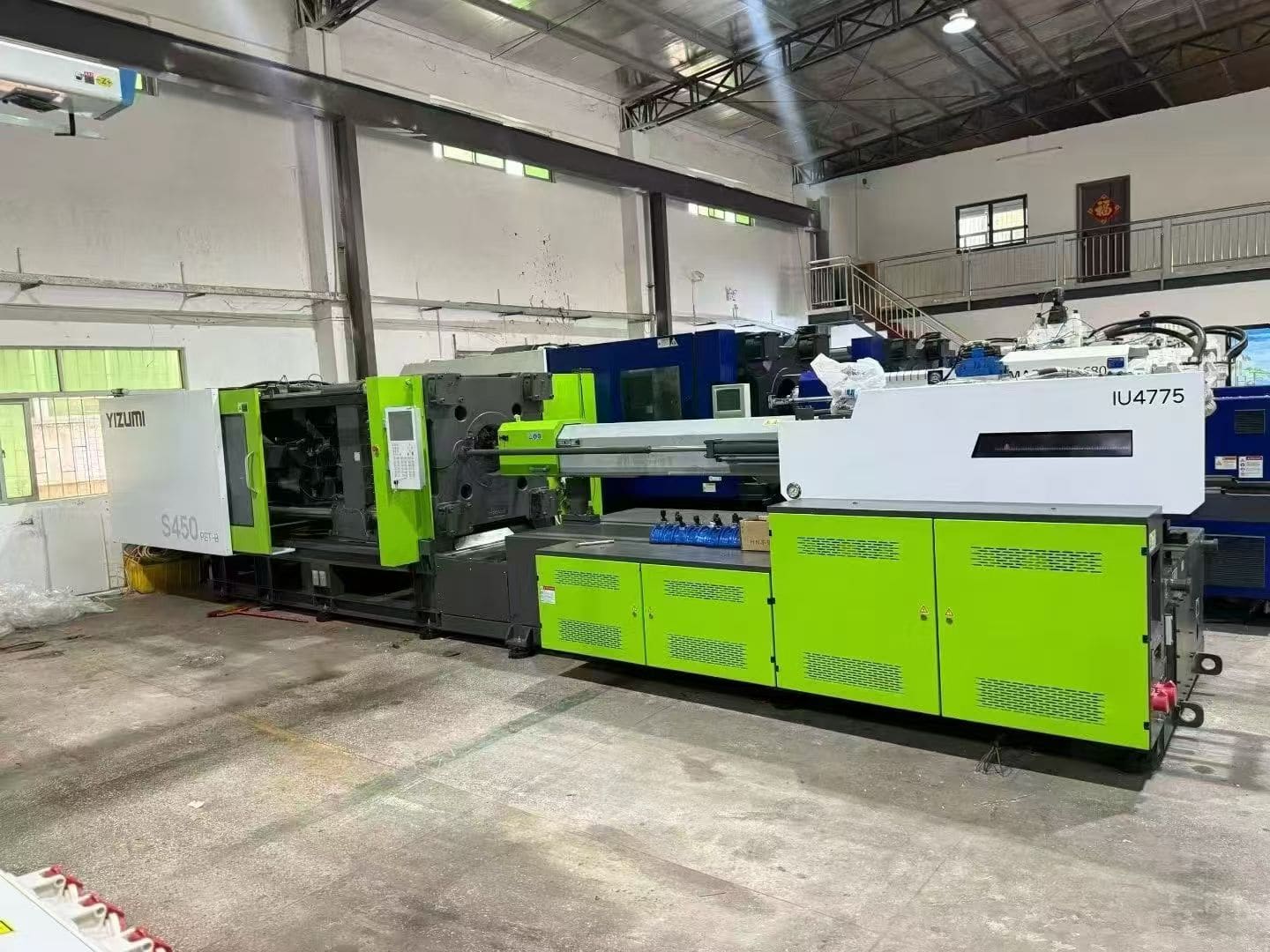
The first deposit risk is paying for a configuration that is not the machine reviewed by the buyer. The quotation, nameplate, serial number, controller screen, voltage, injection unit and accessories should describe the same equipment.
Unsupported manufacturing year, operating hours, repair history, controller condition, screw condition or cosmetic refurbishment should remain marked as unverified until evidence is available. A low price should not close these gaps; it should make the risk visible in the decision file.
- Hold if machine identity does not match across documents and photos.
- Mark year and operating hours as unverified unless the record is attached.
- Do not pay a refurbishment premium for cleaning or repainting without a completed-work and parts list.
- State hidden wear limits for screw, barrel, pump, seals, tie bars and controller components.
Functional test and mold-fit risks
Power-on evidence is weaker than a function sequence. Before deposit or before balance payment, the buyer should agree which functions must be shown and what happens if the machine fails the test.
A used machine can be in acceptable condition and still be unsuitable for the buyer's mold. Mold thickness, tie-bar spacing, ejector layout, core pull, opening stroke, shot requirement, utilities and automation interfaces should be reviewed before payment milestones are fixed.
- Clamp open and close, mold-height adjustment and ejector movement
- Injection carriage movement, screw rotation, charging and heating
- Controller alarms, input/output status and relevant operating modes
- Emergency stop and safety-door checks within the agreed test scope
- Mold and factory-interface review against actual buyer data
Safety and compliance risks should stay evidence-based
Injection molding machines include clamping movement, injection movement, thermal zones, hydraulic pressure, electrical cabinets and possible robot or auxiliary interfaces. ISO 20430 identifies safety requirements for injection moulding machines within its scope. ANSI's explanation of ANSI/PLASTICS B151.1 describes hazards around the mold area, clamping area, injection unit, heaters, parts discharge and hoses.
OSHA's hazardous-energy guidance explains that unexpected startup or release of stored energy can injure workers during service and maintenance. These references do not certify a used machine for a destination market; they show why safety-related evidence and qualified local review are necessary.
CE, customs and payment risks need qualified review
CE marking is not a general quality award. European Commission guidance explains that CE marking applies to covered product categories and does not indicate origin or approval by the EU or another authority. If CE is claimed, request machine-matched documentation and have it reviewed for the target market.
This guide cannot verify seller ownership, title, liens, sanctions, customs classification, import permission, tax exposure or payment security. Those items require local legal, customs, banking or compliance support before the buyer treats them as resolved.
Write deposit conditions in plain language
The agreement should connect payment milestones to identifiable evidence. If a function is not tested or a document is not provided, that gap should be visible before money moves.
- Deposit applies only to the identified machine with matching serial number.
- Final balance is subject to agreed inspection or test evidence.
- Any untested function is listed as an exclusion.
- Packing photos must be shared before sealing or dispatch.
- Accessories, manuals, spare parts and documents are listed.
- Repair, replacement or refund handling is defined if the machine fails agreed pre-shipment conditions.
Have local legal counsel review binding contract language where needed. This guide is a procurement checklist, not legal advice.
Practical checklist before deposit
A good deposit file should let a manager see what is known, what is still open and who owns the next confirmation. That is more useful than a long chat history or a collection of attractive machine photos.
- Match machine identity across all documents.
- Convert every condition claim into evidence or an exclusion.
- Confirm the machine can run the buyer's mold and material plan.
- Confirm trade term, risk transfer, packing scope and loading evidence.
- Ask the broker what import data is needed before loading.
- Keep unresolved items in a written risk register.
Common buyer questions
Should a buyer pay a deposit before receiving a running-test video?
Only when the missing test and resulting risk are explicitly accepted in writing. Otherwise, make the agreed function evidence a deposit or balance-payment hold point.
Is a CE mark enough to approve a used injection molding machine?
No. The documentation must match the exact machine and applicable requirements, and the buyer still needs qualified review of installation and local responsibilities.
Does a smaller deposit remove used-machine buying risk?
It reduces the amount initially exposed but does not resolve machine identity, condition, mold fit, shipping, import, title, payment-security or compliance questions.
Sources and references used for this guide
This guide supports early project planning. Final machine selection and commercial configuration must be confirmed from the actual part, mold, material, factory utilities and production target.