
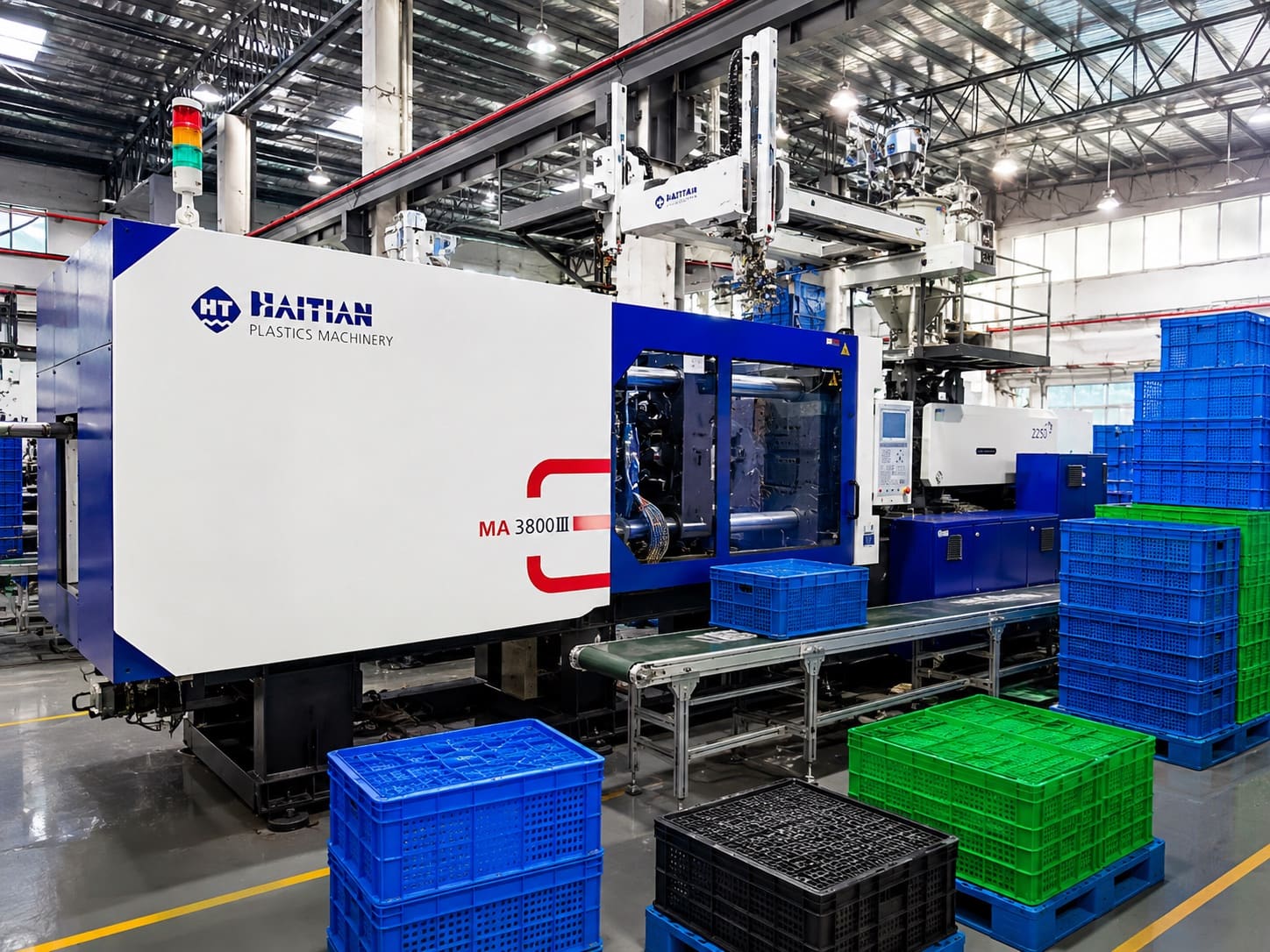
What robot safety and machine-interface evidence should be agreed before approving a turnkey injection molding cell?
Define the machine-robot interface, signal list, emergency-stop behavior, guarding, end-of-arm tooling, part-grip confirmation, reset logic, downstream transfer, FAT/SAT records and responsibility boundary before approval. GEERPOWER cell layout, robot model, output, price, delivery and commissioning remain NEEDS_EVIDENCE until documented for the exact project.
Decision checklist
- Confirm whether the robot interface is included in the GEERPOWER turnkey scope or supplied by another integrator.
- Ask for a signal list, not only a robot brand or model.
- Define what happens on emergency stop, guard open, robot fault, part missing and conveyor jam.
- Keep output, no-scratch handling and safety validation as NEEDS_EVIDENCE until FAT/SAT records exist.
Robot interface is a project scope item
A turnkey injection molding cell with robot take-out should be reviewed as an integrated machine, robot, end-of-arm tooling, guarding and downstream transfer system. A connector name alone does not prove that the cell is ready.
EUROMAP 67 defines an electrical interface between an injection moulding machine and a handling device or robot. It is useful because the robot has to coordinate with mold-open state, ejector movement, emergency stop and safety signals.
EUROMAP 67 helps define interface signals. It does not replace a complete cell-safety and acceptance review.
Define the safety interface evidence
The project should list the machine-robot interface, safety channels, end-of-arm tooling, part-grip confirmation, mold-entry timing, reset logic and FAT/SAT test plan. Each item should have an owner and acceptance method.
ISO 10218-2 and OSHA robotics standards pages support robot-system safety review. They do not verify a specific GEERPOWER robot cell or site installation.
- Machine-robot interface: EUROMAP 67 or another agreed interface, signal list and wiring owner.
- Safety channels: emergency stop, guard signals and safety-device status.
- End-of-arm tooling: grip method, vacuum or sensor confirmation and reject handling.
- Mold timing: mold-open permission, ejector timing and robot entry path.
- Guarding and access: fence, doors, reset point and maintenance access.
- Acceptance evidence: dry cycle, mold trial, alarm test, safety reset and handover records.
FAT and SAT should be planned together
Factory acceptance can check agreed machine and robot functions before shipment. Site acceptance may still be required for final guarding, floor layout, utilities, downstream conveyors and local safety review.
The RFQ should state which functions can be checked before shipment and which items remain open until site installation.
Technical limitations
This guide cannot confirm robot brand, safety wiring, installed guarding, output, delivery, price, commissioning or validation for any GEERPOWER cell. Those items remain NEEDS_EVIDENCE until tied to the exact turnkey scope.
Interface and safety standards support the question set, but the actual safe design depends on the selected robot, cell layout, tooling and local rules.
Common buyer questions
Is EUROMAP 67 enough to approve a turnkey robot cell?
No. EUROMAP 67 helps define interface signals, but the complete cell also needs guarding, risk review, reset logic, end-of-arm tooling and acceptance evidence.
Should robot safety be checked before shipment or after installation?
Both stages may matter. FAT can check agreed functions before shipment, while SAT may be needed for final layout, local guarding, utilities and downstream equipment.
Can every turnkey cell use the same robot safety plan?
No. The plan depends on part geometry, mold layout, transfer path, robot, guarding, local rules and the buyer's acceptance method.
Sources and references used for this guide
This guide supports early project planning. Final machine selection and commercial configuration must be confirmed from the actual part, mold, material, factory utilities and production target.

