What should a turnkey molding-cell RFQ define before adding molded-part laser marking?
Prepare part drawings, resin and color data, mark location, code content, data source, fixture datum, verification rule, reject flow, safety boundary and FAT/SAT acceptance evidence. Keep selected equipment, mark contrast, code-read result, takt time, sample approval, price and delivery as NEEDS_EVIDENCE until documented for the exact project.
Decision checklist
- Provide the part drawing and mark the exact code location and readable direction.
- Share resin, color, additive and surface-finish information before discussing mark contrast.
- Define whether the mark is fixed, lot-based, serialized or connected to buyer data.
- State the verification method and reject flow for no mark, wrong code, unreadable code or data mismatch.
Laser marking is a traceability process
Laser marking after molding is not just a decorative add-on. Material, surface texture, code content, fixture repeatability, verification and laser safety all affect whether the station belongs in a turnkey scope.
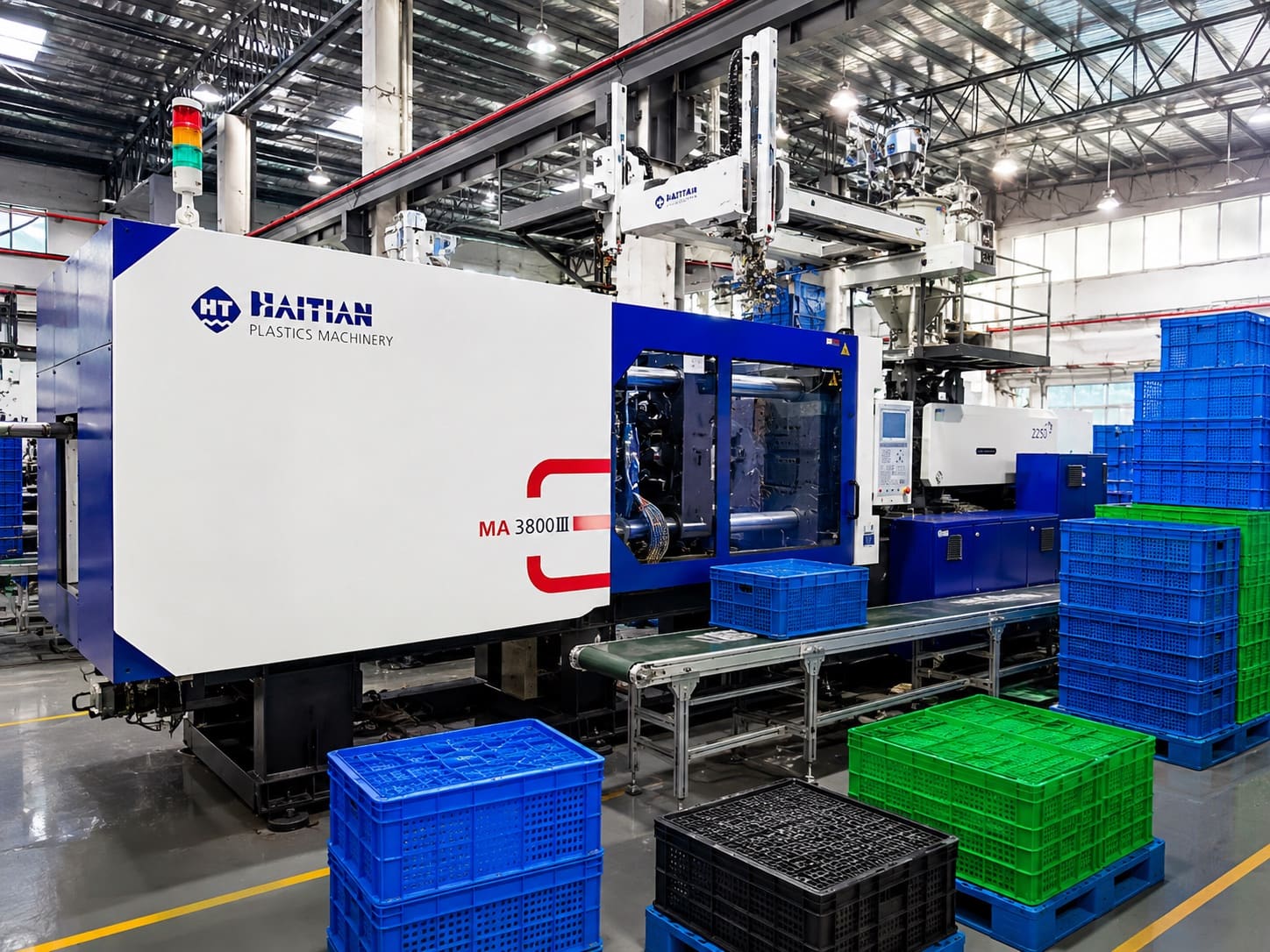
A useful RFQ should separate the molded-part requirement from the downstream coding requirement. GEERPOWER can then review the injection machine, robot, conveyor, laser enclosure, fixture, data source and FAT/SAT evidence as one project boundary.
Do not approve a laser station from a hardware name alone. Approve it from code data, fixture logic, verification and safety evidence.
Write the scope before choosing hardware
The buyer should provide the drawing, resin, color, additive rule, mark-location surface, code content and data source. GEERPOWER should clarify fixture datum, orientation control, wrong-part prevention, verification method, reject handling, access doors and reset logic.
This keeps the quote from hiding data ownership and reject responsibility. A laser marker, scanner or robot page can support the discussion, but the exact selected equipment and result remain evidence-gated until project records exist.
- Molded part basis: drawing, resin, color, additive rule and mark-location surface.
- Code data: fixed logo, lot code, serial number, QR or Data Matrix rule and data source.
- Fixture and handling: datum surface, nest contact points, orientation rule and robot or conveyor handoff.
- Verification and rejects: code-read rule, contrast sample, unreadable-code flow and retest boundary.
- Safety and enclosure: laser class boundary, access doors, extraction need and reset logic.
Define verification and handover records
Laser-marking quality depends on resin, color, additives, molded-part stability, fixture repeatability, laser selection, data handling and verification method. One marked sample does not prove long-run contrast, code integrity or takt time.
The FAT/SAT file should include accepted samples, rejected samples, code records, unreadable-code handling, safety interlock checks, open issues, spares and training boundaries. Missing project details should stay as NEEDS_EVIDENCE until the buyer and supplier review them together.
Common buyer questions
Is laser marking included in a normal injection molding machine quote?
No. Laser marking is a downstream coding and traceability process. It belongs in the quotation only when the buyer requests a turnkey cell and the mark, data, fixture, verification and safety scope are written.
What evidence should be reviewed before approving a laser-marking cell?
Review the molded part material, color, mark location, code content, data source, fixture concept, verification method, reject flow, guarding boundary and FAT/SAT records.
Is laser marking the same as pad printing?
No. Pad printing usually applies ink for decoration or labels, while laser marking changes or marks the material surface for permanent codes or traceability. The fixture, data and verification scope can be very different.
Sources and references used for this guide
This guide supports early project planning. Final machine selection and commercial configuration must be confirmed from the actual part, mold, material, factory utilities and production target.