
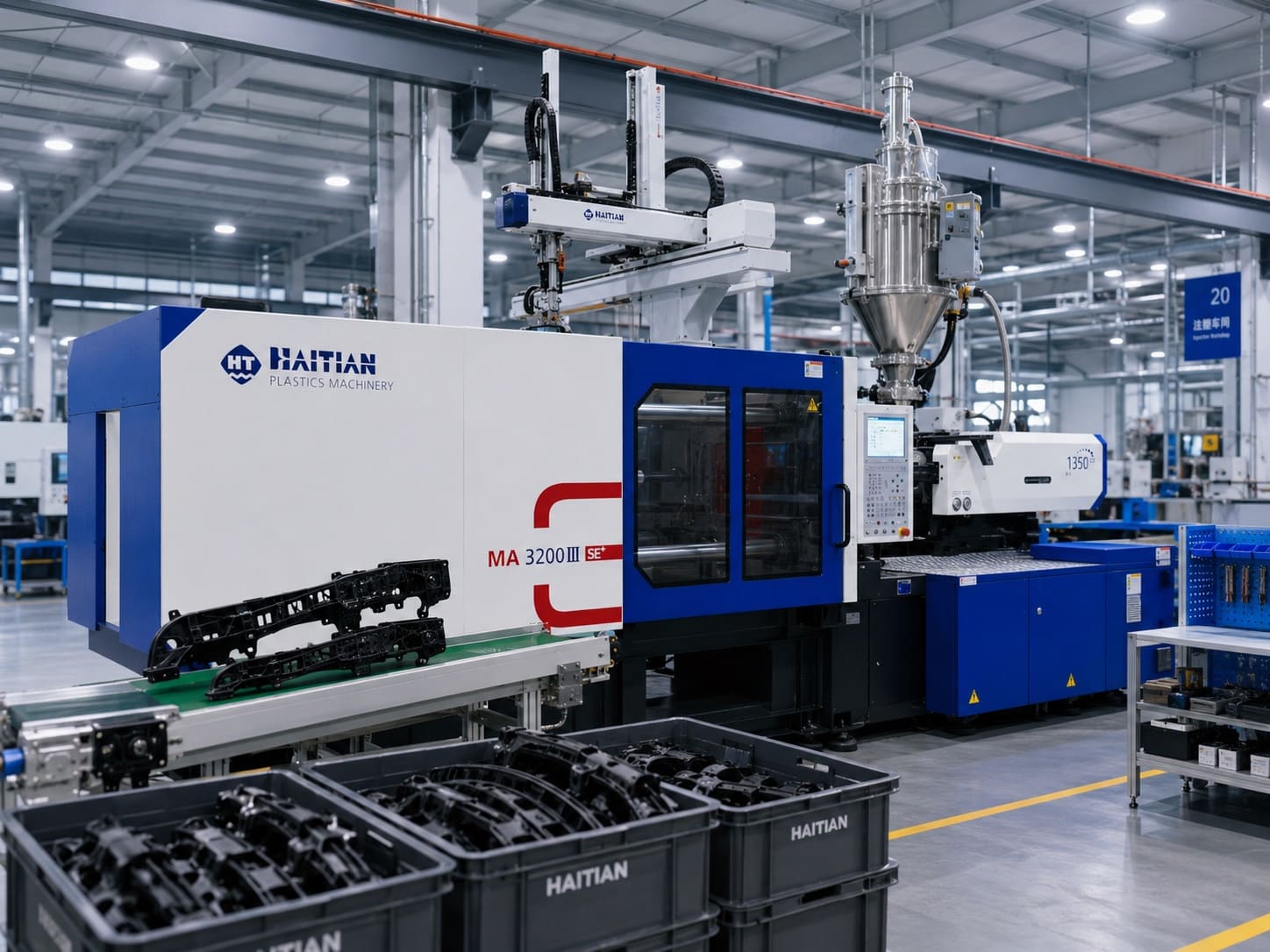
What auxiliary equipment should an injection molding solution review?
Review resin preparation, material conveying, mold temperature, cooling, part removal, scrap handling, safety access and factory utilities around the injection molding machine. Exact dryer, loader, chiller, robot, conveyor or utility sizes should remain NEEDS_EVIDENCE until resin, mold, output, layout and site data are supplied.
Decision checklist
- Start with resin grade, drying need, part weight, cavity count and regrind policy.
- Review mold cooling, target mold temperature, water quality and factory-water interface.
- Choose part removal and automation from part size, cycle target, surface risk and labor plan.
- Keep auxiliary models, capacities, utility loads, layout dimensions, price and delivery as NEEDS_EVIDENCE until evidence exists.
Think in three zones
Before molding, resin must be stored, prepared and moved. WITTMANN lists auxiliary-equipment application areas such as drying, conveying, blending, temperature control and recycling. These categories are useful because they show that the machine is only one part of the production cell.
During molding, the machine, mold and process interfaces need cooling, temperature control, safety access and sometimes insert or robot handling. After molding, parts and runners may need picking, conveying, inspection, packing or scrap handling.
Plan auxiliaries from buyer inputs
Resin preparation may require a hopper dryer, dehumidifying dryer, mixer or material storage. Material conveying may require a loader, vacuum line, receiver, filter and hose routing. Mold temperature may require temperature controllers, manifolds and a cooling circuit plan.
Cooling may require a chiller, cooling tower interface or factory-water connection. Part removal may use a sprue picker, robot, conveyor or manual process. Scrap handling may need a crusher, granulator or bin process. Safety and access must consider guards, interlocks, aisles and operator stations.
- Resin grade, filler, drying temperature and drying time.
- Part weight, runner weight, cavity count and expected regrind policy.
- Mold cooling circuit count, required mold temperature and water connection details.
- Target cycle and target hourly output.
- Factory water, air, voltage, floor layout and material-room distance.
- Labor plan for manual removal, picker, robot, conveyor or downstream automation.
Resin and mold data drive the plan
Eastman's processing and mold design guidance notes that proper mold design and machine setup are essential parts of a quality molding operation. Some material choices require controlled drying, stable mold temperature and process setup before the press can repeat reliably.
Avient's mold design guidance explains that mold venting helps air leave the sprue, runner and cavity, and that poor venting can contribute to defects. Machine tonnage alone cannot resolve mold or auxiliary planning issues.
Compare machine-only quote with cell scope
A machine-only quote may not define material preparation, cooling, part removal, site interfaces or acceptance evidence. An injection molding solution scope should review dryer, loader, resin handling, mold, chiller, factory-water interface, robot, picker, conveyor, power, water, air, layout and lifting.
Acceptance should be linked to the machine, auxiliaries, mold trial and site conditions instead of a general machine test.
Technical limitations
This article does not size a dryer, loader, chiller, robot or conveyor without project evidence. Material drying requirements should come from the resin supplier's datasheet or processing guide.
Cooling capacity depends on mold, resin, cycle, ambient conditions and factory water. Automation layout depends on the actual machine, mold, guarding, part-removal path and downstream packaging.
Common buyer questions
Can I buy the injection molding machine first and add auxiliaries later?
Sometimes, but the machine decision can be affected by drying, cooling, automation and floor layout. Reviewing auxiliaries early reduces the chance of a weak production-cell fit.
Does every injection molding cell need a robot?
No. The decision depends on part size, cycle, surface requirements, labor plan, safety, downstream handling and budget. It should be reviewed from the project data.
Who should provide resin drying data?
The buyer should provide the resin supplier's datasheet or processing guide where available. If it is missing, drying requirements should stay open until verified.
Sources and references used for this guide
This guide supports early project planning. Final machine selection and commercial configuration must be confirmed from the actual part, mold, material, factory utilities and production target.

