
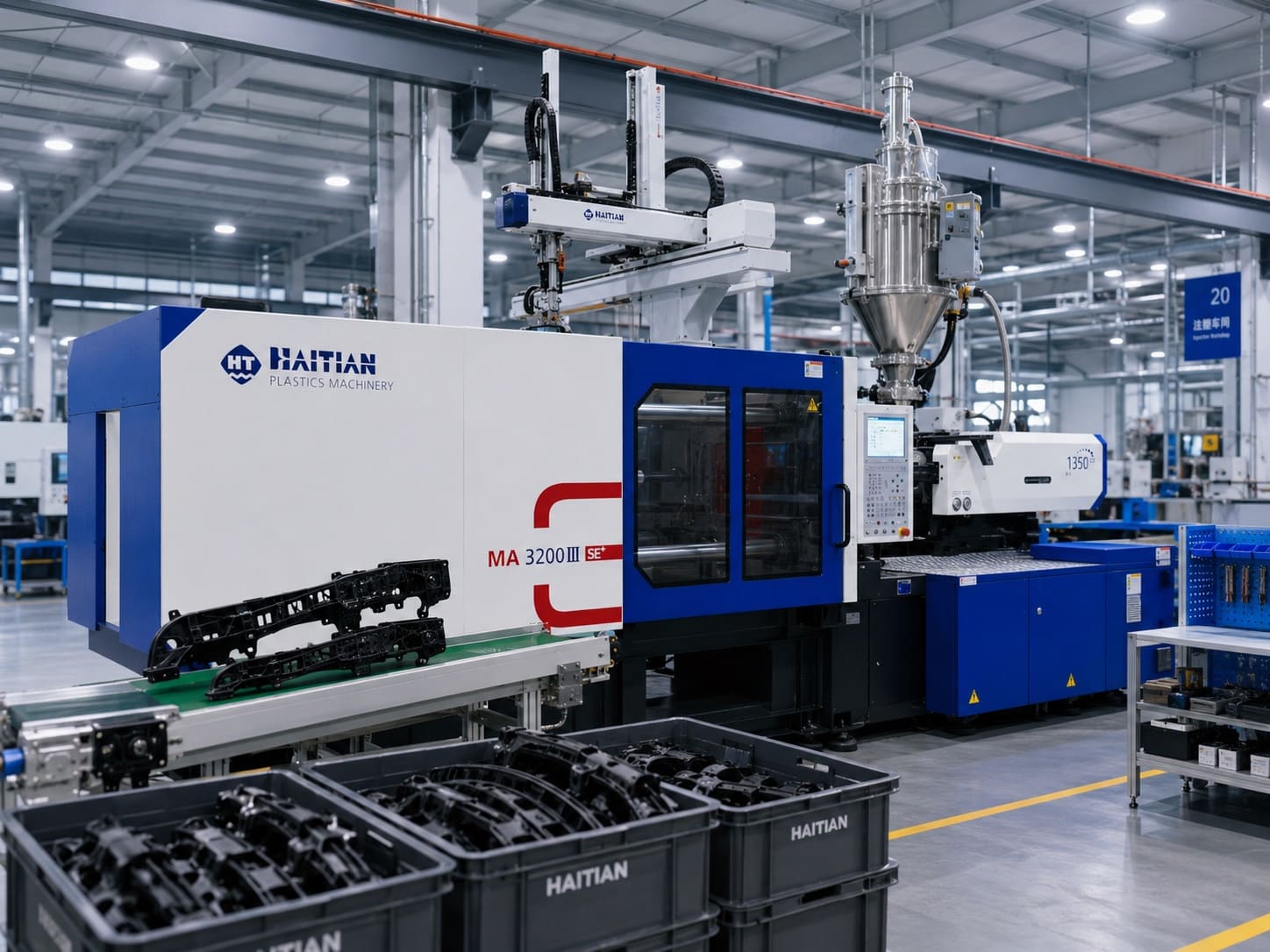
What should a buyer prepare before requesting an injection molding machine quote?
Prepare product drawings or photos, resin data, part and runner weight, mold dimensions, cavity count, output target, auxiliary needs, factory utilities, destination and acceptance method before asking for a machine quote. Missing data should stay marked as NEEDS_EVIDENCE instead of being replaced by supplier guesses.
Decision checklist
- Send product, resin and part-weight evidence before requesting final machine sizing.
- Confirm mold dimensions, mold weight, height, cooling, ejection and locating interfaces.
- Define target output, cycle assumptions, shifts and auxiliary equipment needs.
- Keep model, controller, price, delivery, energy and certification claims open until the project file supports them.
Why tonnage alone creates weak quotes
Clamping force matters, but it is only one part of a machine decision. A press that appears suitable by tonnage may still fail on tie-bar spacing, mold thickness, opening stroke, shot size, screw choice, injection pressure, plasticizing capacity, cooling demand, ejection, automation access or factory utilities.
ISO 20430 describes safety requirements for injection moulding machines and separates machine safety from the design and construction of the mold. That boundary is useful for project planning: the machine, mold and production-cell interfaces must be checked together.
A one-line tonnage request produces a weak quotation. A project brief produces a reviewable machine and cell recommendation.
Build the project brief around evidence
The brief should identify what is confirmed, what is assumed and what still needs evidence. Product drawings, photos, wall sections and tolerance concerns define moldability, ejection and quality risk. Resin grade, filler, drying instruction and processing guide affect screw, drying, barrel temperature, mold temperature and auxiliary scope.
Part weight, runner weight and cavity count support shot-size, plasticizing and output review. Mold dimensions, weight, height, locating ring, ejector pattern and cooling circuits confirm physical fit. Target cycle, hourly output, shifts and scrap target define machine route, cooling, automation and staffing assumptions.
Ask material and mold questions early
Material preparation is not a small accessory decision. Some resin and mold combinations need controlled drying, controlled mold temperature, stable cooling and careful setup before the machine can produce reliable parts.
Mold venting, cooling, runner, gate and ejection details can affect defects, surface quality and cycle stability. A supplier should not try to solve every part-quality risk with nominal tonnage.
- Product drawing or photos with key dimensions.
- Resin grade or at least resin family, filler and drying requirement.
- Finished-part weight, runner weight and cavity count.
- Mold dimensions, mold weight, mold height, locating ring and ejector data.
- Target cycle, target hourly output and expected shifts.
- Factory power, cooling water, compressed air, floor space and lifting conditions.
Technical limitations
This article cannot size a machine without the buyer's actual product and mold data. A resin family name does not replace a material datasheet or processing guide. A mold name does not prove tie-bar fit, mold height, cooling adequacy or ejection fit.
Published project examples should not be used as evidence for another buyer's output, cycle, price or delivery date. Any Geerpower model, controller, certification, lead time, power consumption or trial result must remain NEEDS_EVIDENCE until supported by the specific commercial and technical file.
Common buyer questions
Can Geerpower quote from product photos only?
Photos can start the discussion, but final sizing needs product dimensions, material, part weight, mold data, output target and factory interface information.
Should the buyer send the mold drawing before choosing a machine?
Yes, when the mold exists or is under design. The mold drawing helps check tie-bar spacing, mold height, ejection, cooling and automation interfaces.
What if some project data is not ready?
Keep those items marked NEEDS_EVIDENCE and quote only a planning range until the missing evidence is supplied.
Sources and references used for this guide
This guide supports early project planning. Final machine selection and commercial configuration must be confirmed from the actual part, mold, material, factory utilities and production target.

