How do you choose the right injection molding machine tonnage?
Choose tonnage from projected area and the expected pressure acting in the mold, then verify shot capacity, screw working range and physical mold fit separately. Part weight or nominal clamping force alone is not enough; the final machine must also support the target cycle, output and production-cell interfaces.
Decision checklist
- Calculate the clamp-force basis from projected area, cavities, resin and process-pressure assumptions.
- Check total part-and-runner shot requirement against a practical screw working range.
- Verify tie-bar spacing, platen size, mold thickness, opening stroke and ejector requirements.
- Confirm cycle target, utilities, robot, core pull, cooling and other production interfaces.
Why tonnage is a starting point, not the final answer
Injection molding machine tonnage describes the available clamping force. It must be sufficient to keep the mold closed while molten plastic fills the cavity, but the nameplate tonnage alone does not prove that a machine is suitable for a specific product.
Two parts with similar weight can require different machines because projected area, resin behavior, wall thickness, flow length, cavity count and process pressure are different. The correct selection therefore starts with product and mold data.
Do not select a machine from part weight alone. Clamp force, shot capacity and physical mold fit must be checked together.
The six inputs needed before selecting a machine
A useful technical review should collect the following information before comparing machine models.
- Part drawing, dimensions and projected area
- Plastic material, additives and expected process conditions
- Finished part weight, runner weight and cavity count
- Mold dimensions, thickness, locating ring and tie-bar requirements
- Target cycle time, hourly output and operating schedule
- Robot, core pull, cooling, power and other production-cell interfaces
Check clamp force and shot capacity separately
Clamp force relates mainly to projected area and the pressure acting inside the mold. Shot capacity relates to the total plastic volume required for the molded parts and runner system. A machine may pass one check and fail the other.
The screw should operate in a practical working range rather than at an extreme. Material-specific density and process behavior must also be considered when converting machine shot data into a usable production estimate.
Confirm that the mold physically fits
Tie-bar spacing, platen dimensions, minimum and maximum mold thickness, opening stroke and ejector requirements can eliminate an otherwise suitable machine. These dimensions should be confirmed from the actual mold drawing or measured mold data.
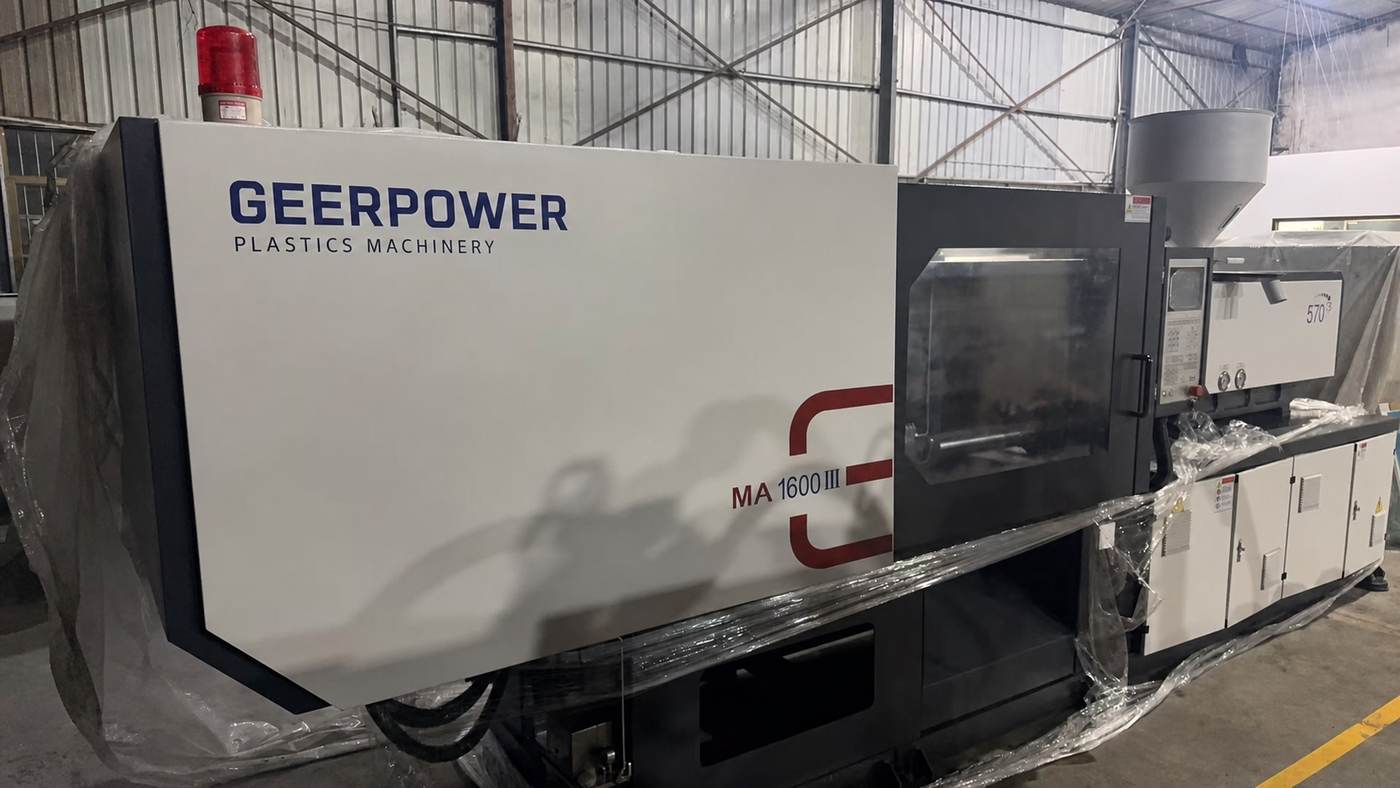
For an existing mold, Geerpower recommends checking every interface before preparing a quotation. For a new mold, the machine and mold teams should align the interface data before the design is frozen.
Use a project range before confirming the final model
A range such as 160T, 220T or 280–320T can be a useful starting point for discussion, but the final recommendation should be documented against the product, mold and output target. This prevents a buyer from receiving a machine list without a defendable production basis.
Common buyer questions
Can injection molding machine tonnage be selected from part weight alone?
No. Clamp force begins with projected area and pressure assumptions, while shot size, screw working range, mold dimensions, opening and ejection requirements must be checked separately.
What data is needed for a machine-size recommendation?
Provide the part drawing, resin, part and runner weight, cavity count, mold dimensions, target cycle and output, plus robot, core-pull, cooling, power and other production-cell interfaces.
Sources and references used for this guide
This guide supports early project planning. Final machine selection and commercial configuration must be confirmed from the actual part, mold, material, factory utilities and production target.